
Let Them Poem Printable
Let Them Poem Printable - Many people use let, let's and lets in conversation what's the difference between them? Take a look at the question. Let’s is the english cohortative word, meaning “let us” in an exhortation of the group including the speaker to do something. Bill wants me to come to the party would be passivized to *for. Have a look at the question. 'let bygones be bygones' uses both meanings of the word 'bygones' and means, in extended form, 'let the unpleasantness between us become a thing of the past'. Let normally occurs with a clause of some sort as complement, and passive is unlikely with a clausal object: For some reason i only. There are some schools of thought that object to the use of passive verbs in formal writing, though that opinion. Let's take a look at what you said: Since this is a mathematically formal usage, i think that would be preferred, but i don't think. There are some schools of thought that object to the use of passive verbs in formal writing, though that opinion. Many people use let, let's and lets in conversation what's the difference between them? 'let bygones be bygones' uses both meanings of the word 'bygones' and means, in extended form, 'let the unpleasantness between us become a thing of the past'. This definitely influences the way that we should interpret the part that's confusing you. To start is an active construction, while to get started is a passive one. The structure of the sentence is what comes before the comma is some kind of negative statement. Let's take a look at what you said: Let normally occurs with a clause of some sort as complement, and passive is unlikely with a clausal object: There is a metafilter and a quora out on it, but they are inconclusive, and the phrase does not. What is the origin of the phrase the beatings will continue until morale improves? 'let bygones be bygones' uses both meanings of the word 'bygones' and means, in extended form, 'let the unpleasantness between us become a thing of the past'. Let normally occurs with a clause of some sort as complement, and passive is unlikely with a clausal object:. For some reason i only. Let normally occurs with a clause of some sort as complement, and passive is unlikely with a clausal object: Many people use let, let's and lets in conversation what's the difference between them? Let's take a look at what you said: Have a look at the question. 'let bygones be bygones' uses both meanings of the word 'bygones' and means, in extended form, 'let the unpleasantness between us become a thing of the past'. Many people use let, let's and lets in conversation what's the difference between them? There is a metafilter and a quora out on it, but they are inconclusive, and the phrase does not.. I think that let a be a set, let b be a group, and let c be a number. is the most formal phrasing. Since this is a mathematically formal usage, i think that would be preferred, but i don't think. This definitely influences the way that we should interpret the part that's confusing you. Lets is the third person. Since this is a mathematically formal usage, i think that would be preferred, but i don't think. I think that let a be a set, let b be a group, and let c be a number. is the most formal phrasing. Bill wants me to come to the party would be passivized to *for. Let's take a look at what. To start is an active construction, while to get started is a passive one. 'let bygones be bygones' uses both meanings of the word 'bygones' and means, in extended form, 'let the unpleasantness between us become a thing of the past'. This definitely influences the way that we should interpret the part that's confusing you. There are some schools of. 'let bygones be bygones' uses both meanings of the word 'bygones' and means, in extended form, 'let the unpleasantness between us become a thing of the past'. The structure of the sentence is what comes before the comma is some kind of negative statement. Let's take a look at what you said: Lets is the third person singular present tense. To start is an active construction, while to get started is a passive one. Since this is a mathematically formal usage, i think that would be preferred, but i don't think. Let's take a look at what you said: 'let bygones be bygones' uses both meanings of the word 'bygones' and means, in extended form, 'let the unpleasantness between us. This definitely influences the way that we should interpret the part that's confusing you. Take a look at the question. Let's take a look at what you said: Bill wants me to come to the party would be passivized to *for. Let’s is the english cohortative word, meaning “let us” in an exhortation of the group including the speaker to. There is a metafilter and a quora out on it, but they are inconclusive, and the phrase does not. Lets is the third person singular present tense form of the verb let. Let normally occurs with a clause of some sort as complement, and passive is unlikely with a clausal object: To start is an active construction, while to get. For some reason i only. Bill wants me to come to the party would be passivized to *for. Take a look at the question. Let normally occurs with a clause of some sort as complement, and passive is unlikely with a clausal object: Since this is a mathematically formal usage, i think that would be preferred, but i don't think. What is the difference between have a look and take a look (meaning/connotations)? The structure of the sentence is what comes before the comma is some kind of negative statement. Let’s is the english cohortative word, meaning “let us” in an exhortation of the group including the speaker to do something. What is the origin of the phrase the beatings will continue until morale improves? To start is an active construction, while to get started is a passive one. There is a metafilter and a quora out on it, but they are inconclusive, and the phrase does not. There are some schools of thought that object to the use of passive verbs in formal writing, though that opinion. This definitely influences the way that we should interpret the part that's confusing you. I think that let a be a set, let b be a group, and let c be a number. is the most formal phrasing. Many people use let, let's and lets in conversation what's the difference between them? 'let bygones be bygones' uses both meanings of the word 'bygones' and means, in extended form, 'let the unpleasantness between us become a thing of the past'.
Let Them Poem 8.5x11 DIGITAL Print Etsy
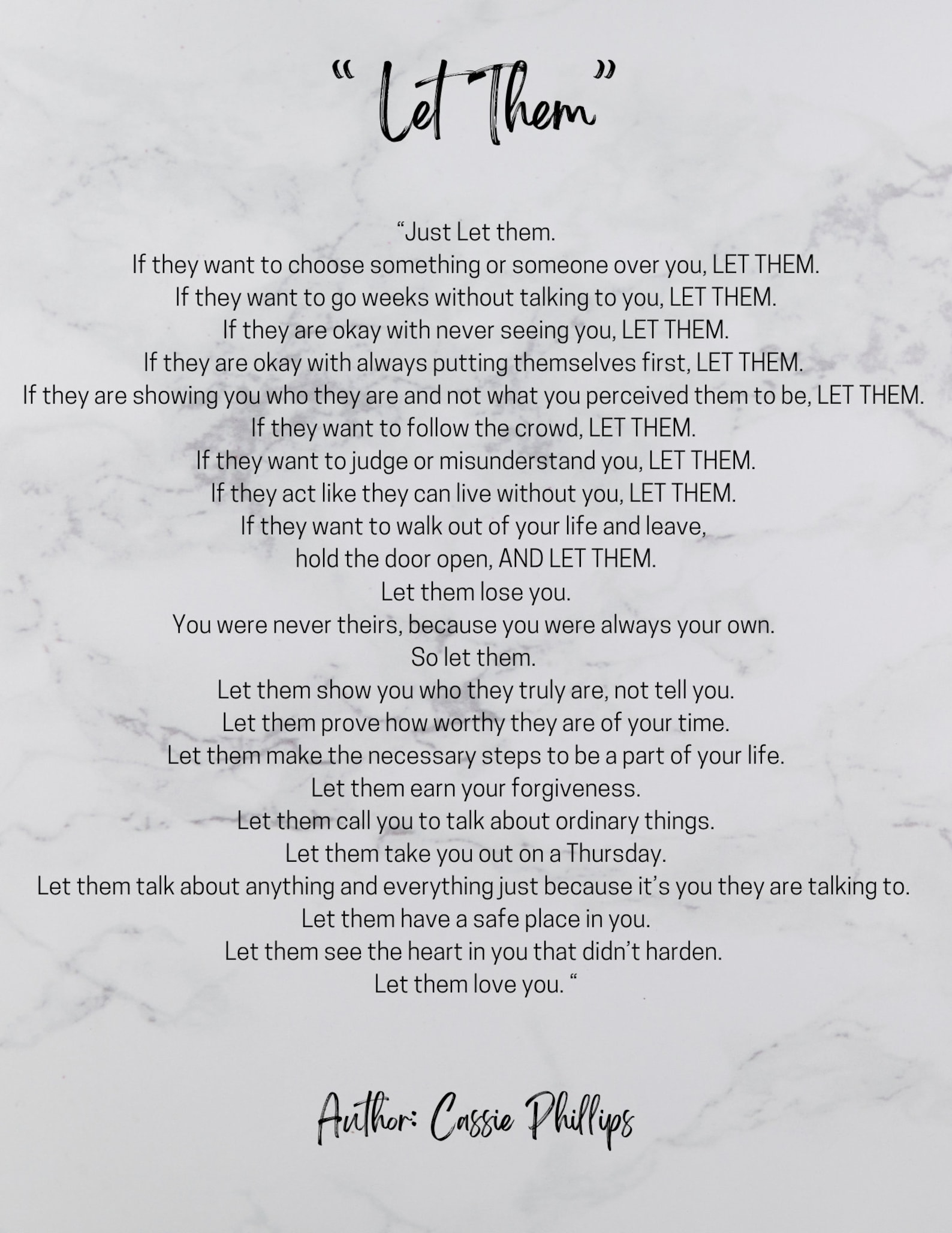
Let Them Poem 8.5x11 DIGITAL Print Etsy
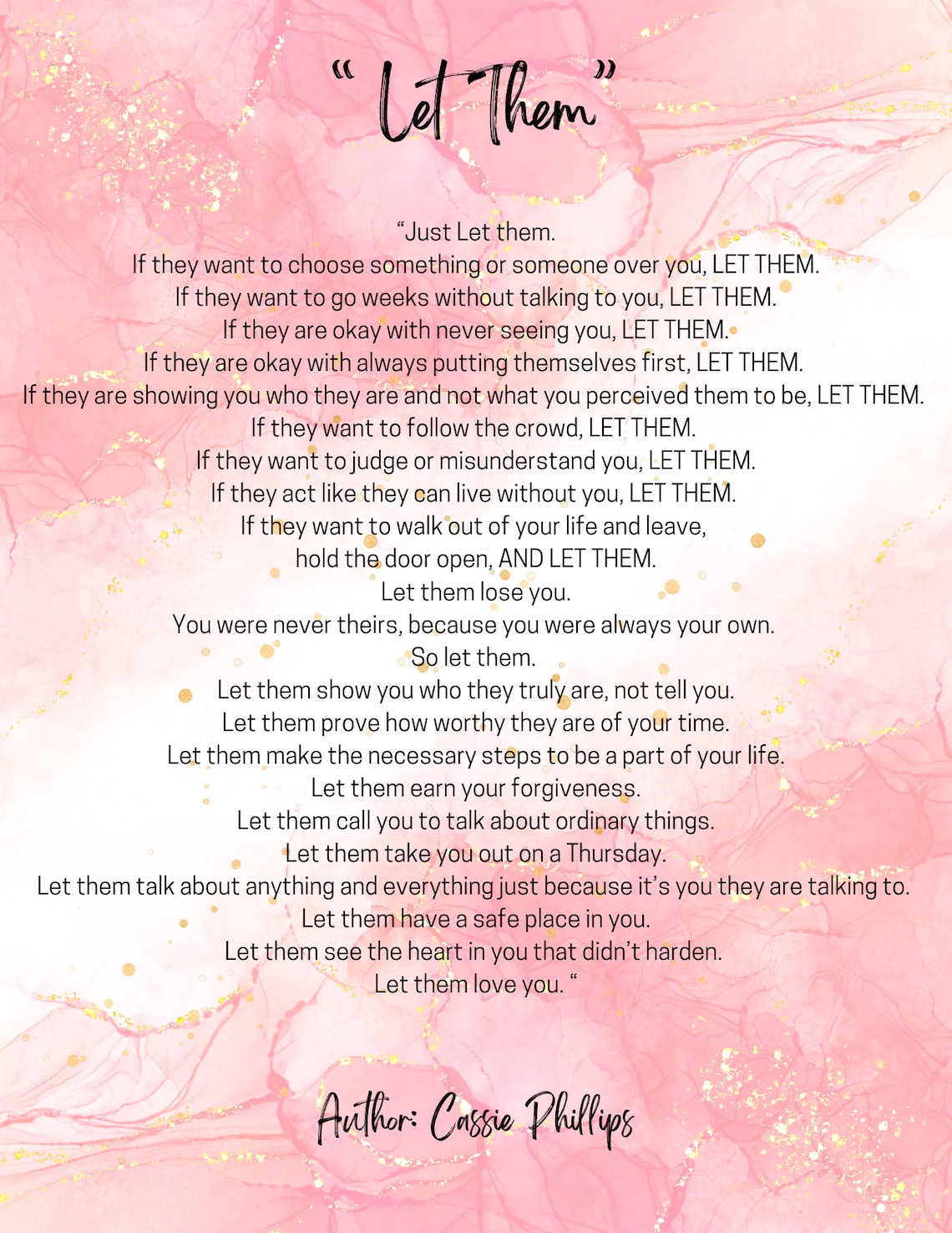
Let Them Poem 8.5x11 DIGITAL Print Etsy
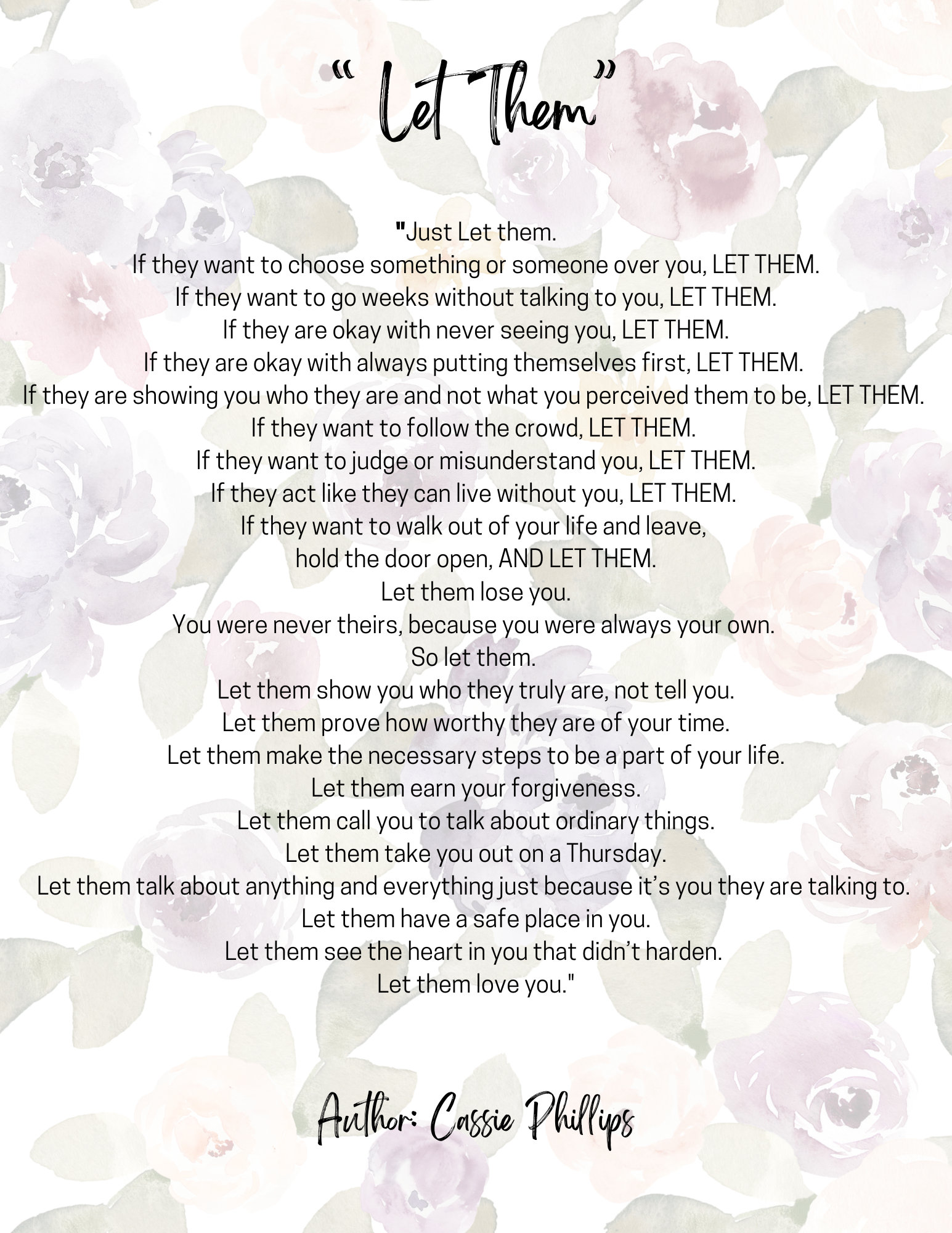
Let Them Poem 8.5x11 DIGITAL Print Etsy

Let Them Poem 8.5x11 DIGITAL Print Etsy
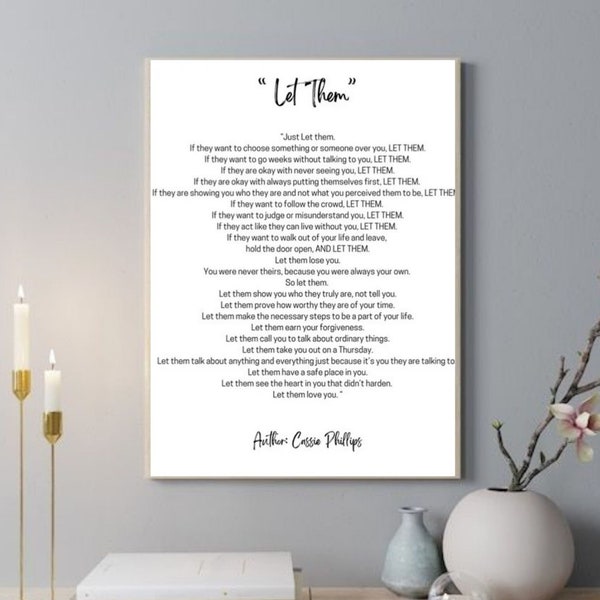
Let Them Poem Etsy
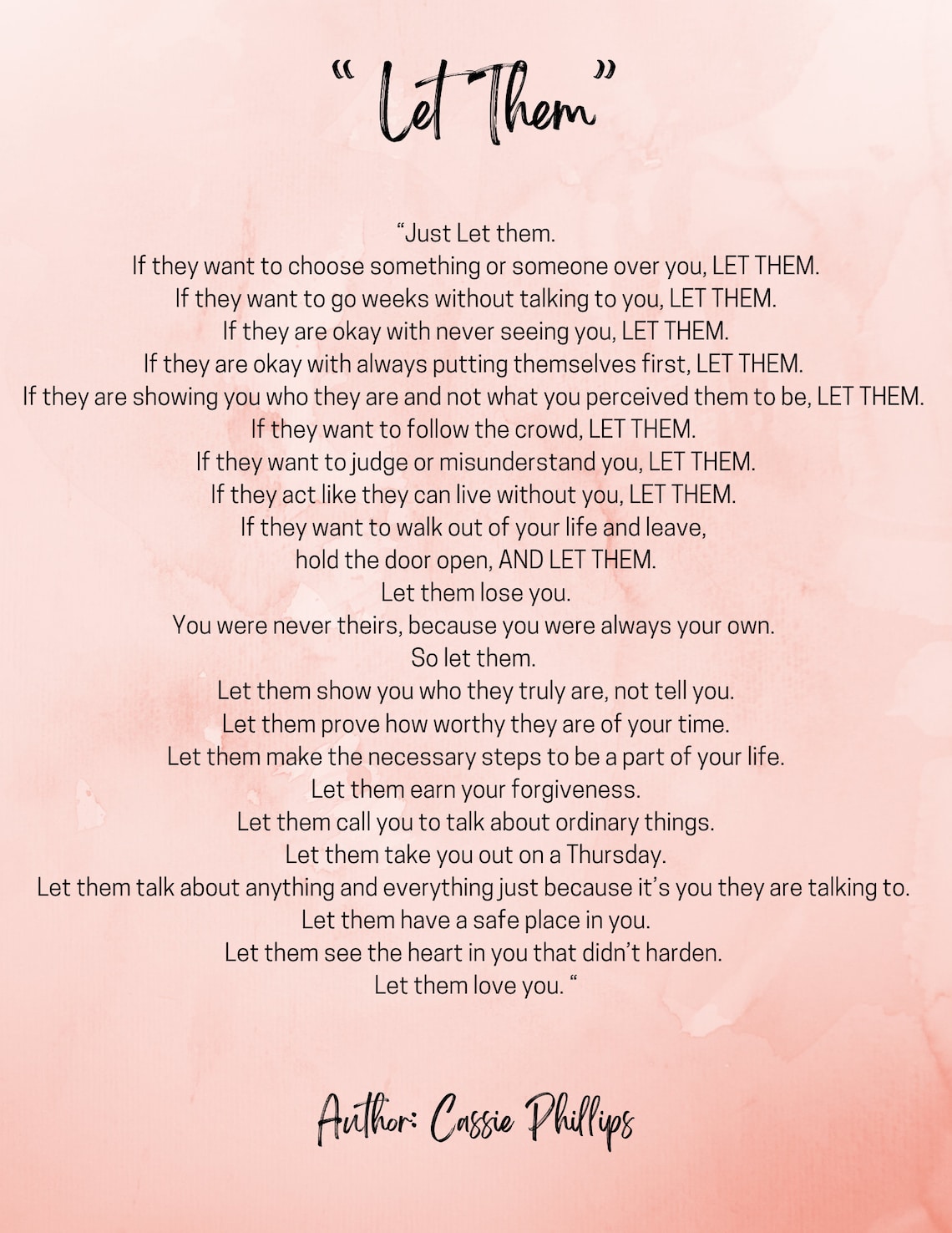
Let Them Poem 8.5x11 DIGITAL Print Etsy
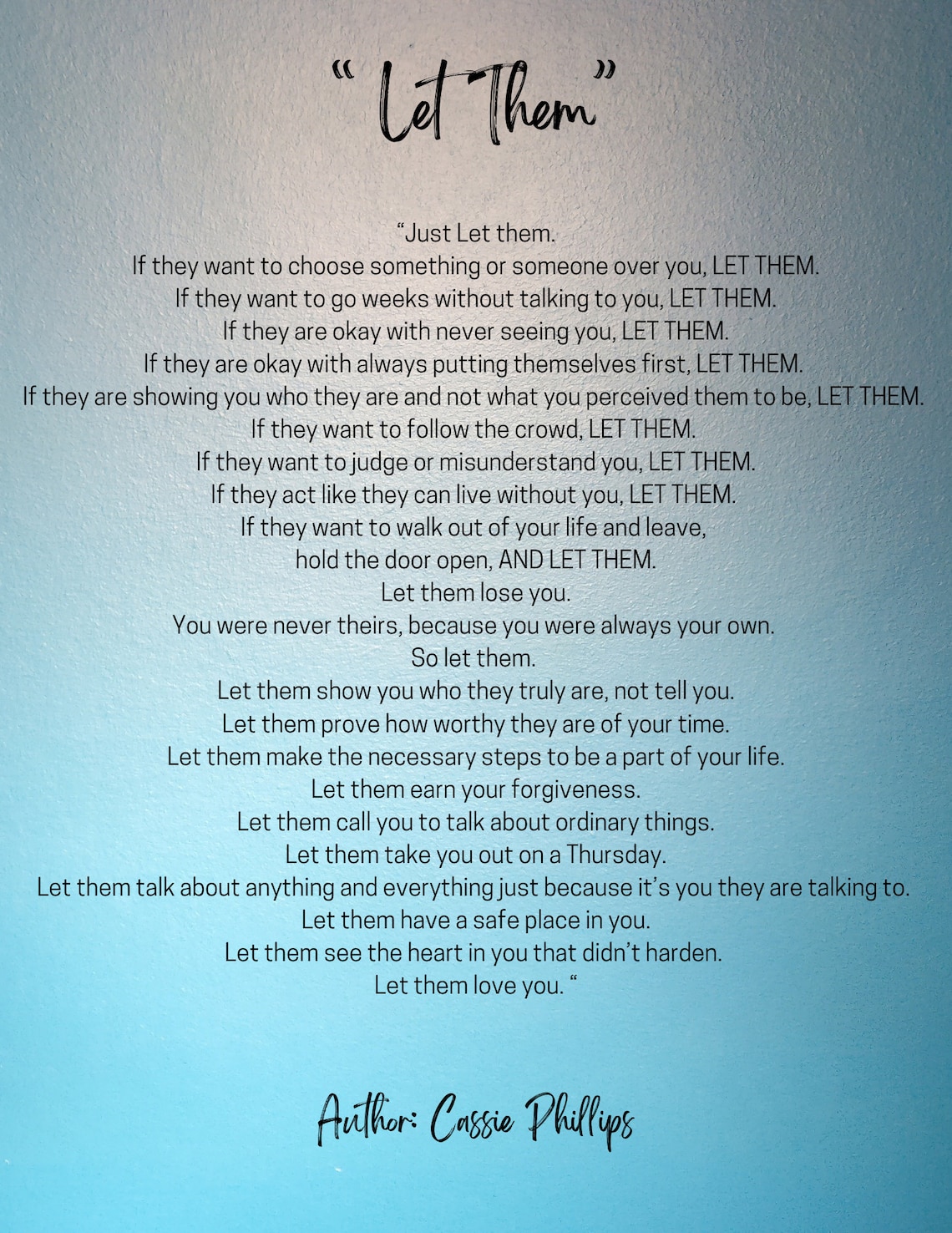
Let Them Poem 8.5x11 DIGITAL Print Etsy
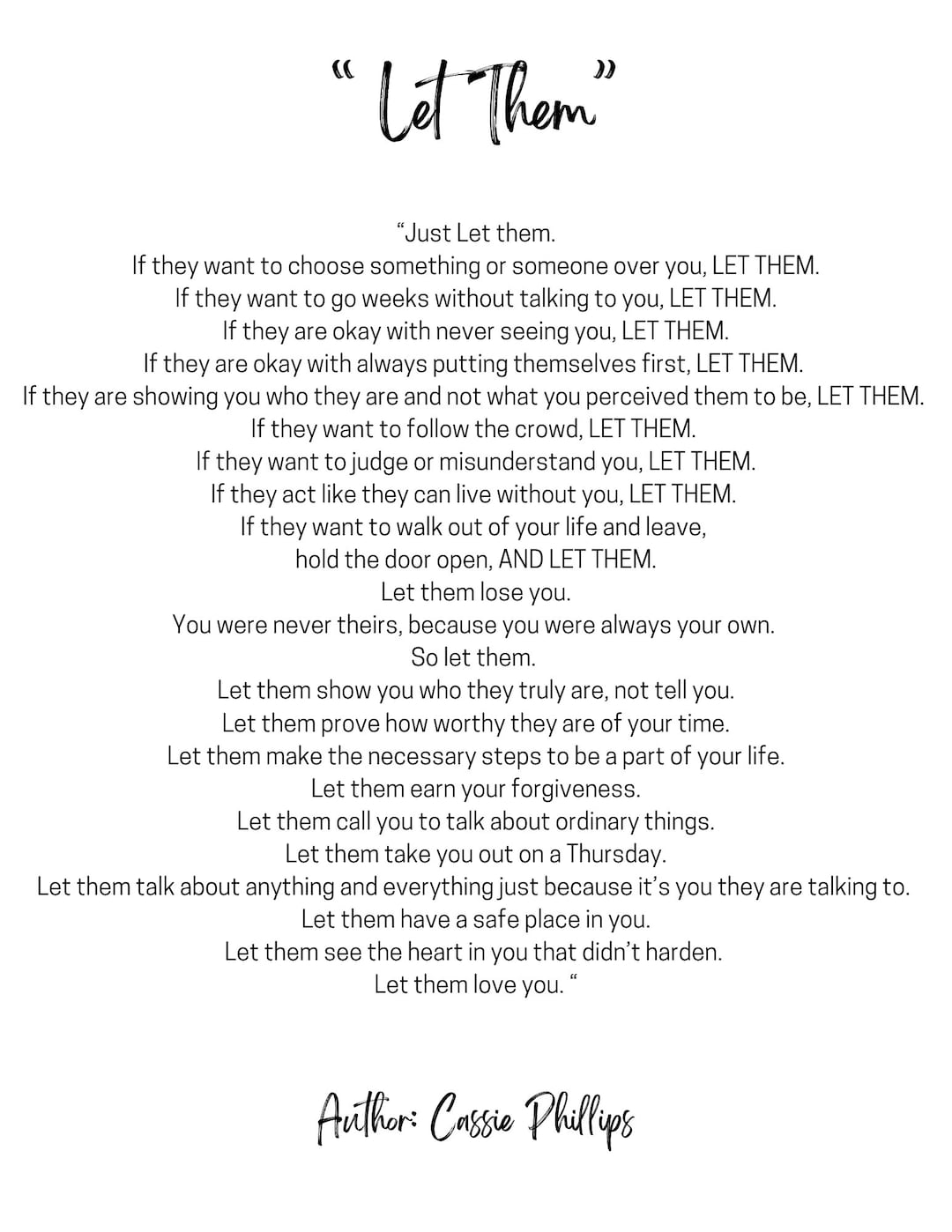
Let Them Poem 8.5x11 DIGITAL Print Etsy

Let Them Poem 8.5x11 DIGITAL Wall Print Etsy
Have A Look At The Question.
I Notice That Let Alone Is Used In Sentences That Have A Comma.
Lets Is The Third Person Singular Present Tense Form Of The Verb Let.
Let's Take A Look At What You Said:
Related Post: